
Our booking pick: The Castle of the Moors ticket, non-refundable. Book this Compare options
The Sintra hills rise just west of Lisbon, close to the Atlantic. They are high, wooded and often wrapped in fog, which made them a good lookout for soldiers and, much later, a romantic dream for kings and poets.
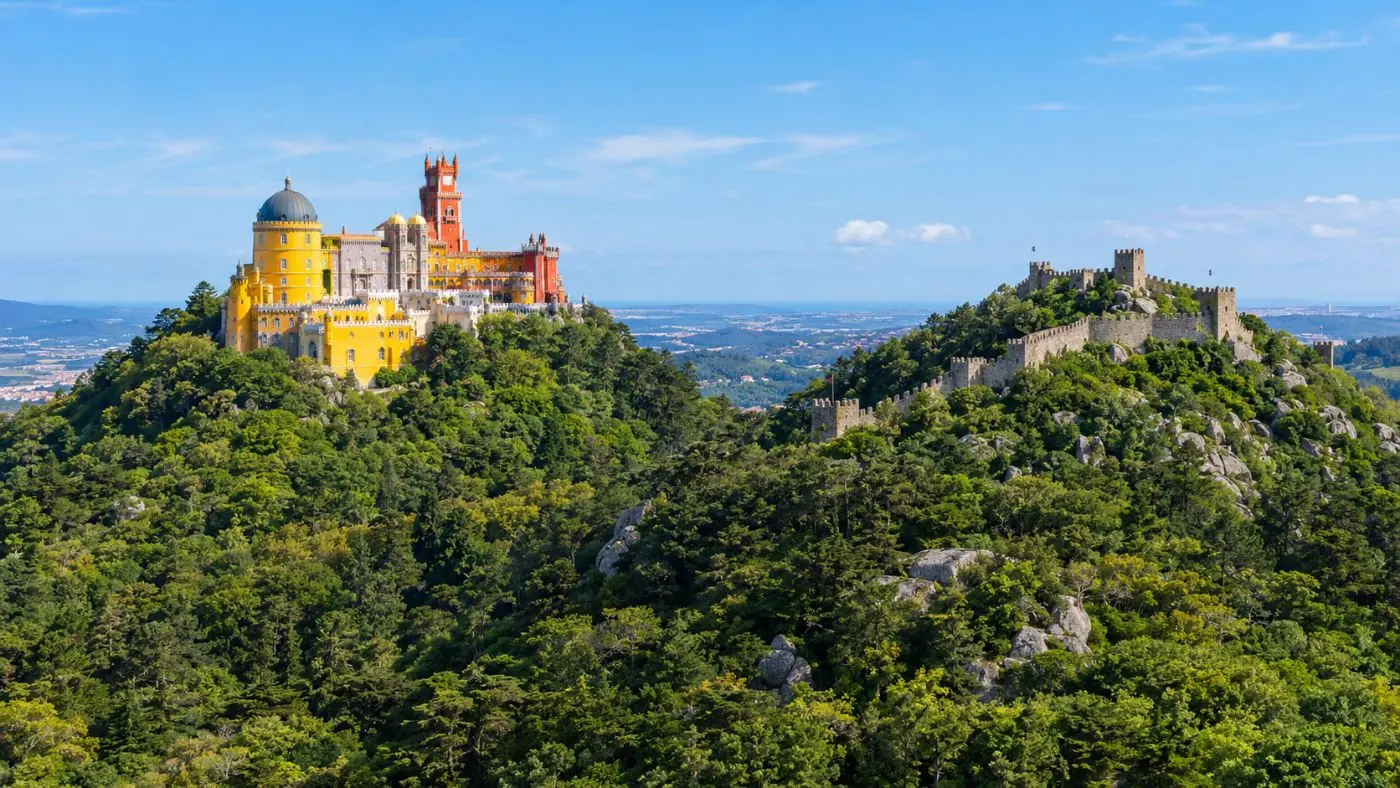
Each layer of Sintra's history left a building behind. The Moors fortified the ridge, the Portuguese kings kept a palace in the town for centuries, King Ferdinand II built Pena in the 1840s, and wealthy outsiders followed with estates like Monserrate and Quinta da Regaleira. In 1995 UNESCO inscribed the whole cultural landscape.
The short answer
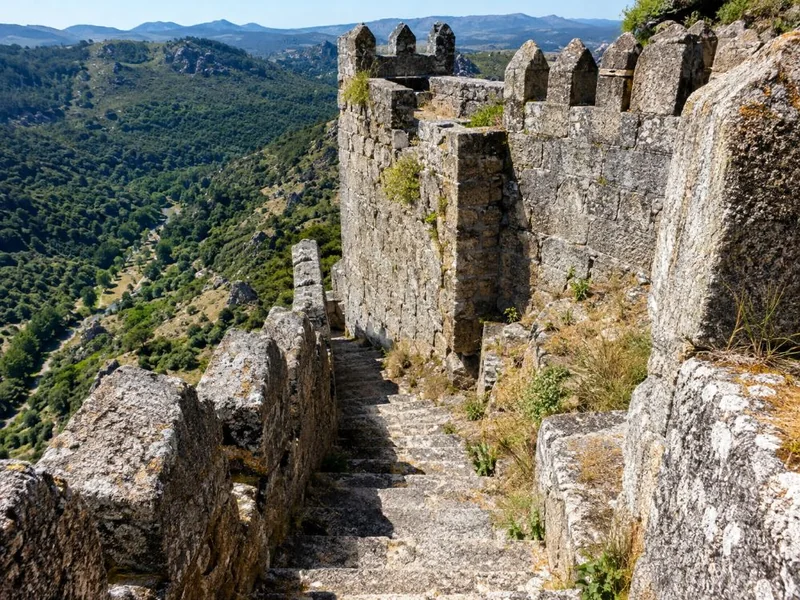
Sintra has one real castle and several palaces that look like castles. The Moorish Castle was founded under Moorish rule (the official site dates it to the 10th century) and passed to Christian forces in 1147. The National Palace in town was a royal residence from the early 15th century. In the 19th century King Ferdinand II restored the castle and built Pena Palace, and rich estate owners followed, ending with Quinta da Regaleira in 1904 to 1910. The fog, the forest and the views made Sintra the place Byron called a "glorious Eden".
Why does Sintra have so many castles?
Because three different eras built on the same hills: a Moorish fortress, a medieval royal palace, and a wave of 19th-century romantic palaces and estates designed to look like castles.
The hills were a natural defensive position, so the Moors built a fortress on the ridge. Once the area was Christian, the kings kept a palace in the town below, and the court spent long periods there. In the 19th century the fashion for Romanticism turned Sintra into a stage set: King Ferdinand II restored the ruined castle and built Pena Palace, and wealthy owners built Monserrate and Quinta da Regaleira nearby.
The timeline shows how the layers stack up. For help choosing between them today, see which Sintra castle to visit.
| When | What happened |
|---|---|
| 10th century | Moorish Castle founded, per the official Parques de Sintra site |
| 1147 | The castle passes to Christian forces after Afonso Henriques takes Lisbon |
| Early 15th century | The National Palace becomes a main royal residence |
| 1511 | Manuel I builds the Monastery of Our Lady of Pena on the peak |
| 1755 | The earthquake leaves the monastery in ruins |
| 1838 | Ferdinand II buys the monastery and the Moorish Castle lands |
| 1842 to 1854 | Main works on Pena Palace |
| 1904 to 1910 | Quinta da Regaleira built for Carvalho Monteiro |
| 1910 | Pena Palace and the Moorish Castle become National Monuments |
| 1995 | UNESCO inscribes the Cultural Landscape of Sintra |
What is the story behind Sintra?
A Moorish hill town that became a royal retreat, then a romantic dream for a king and for European travellers. Its history runs from a 10th-century fortress to a 20th-century millionaire's garden.
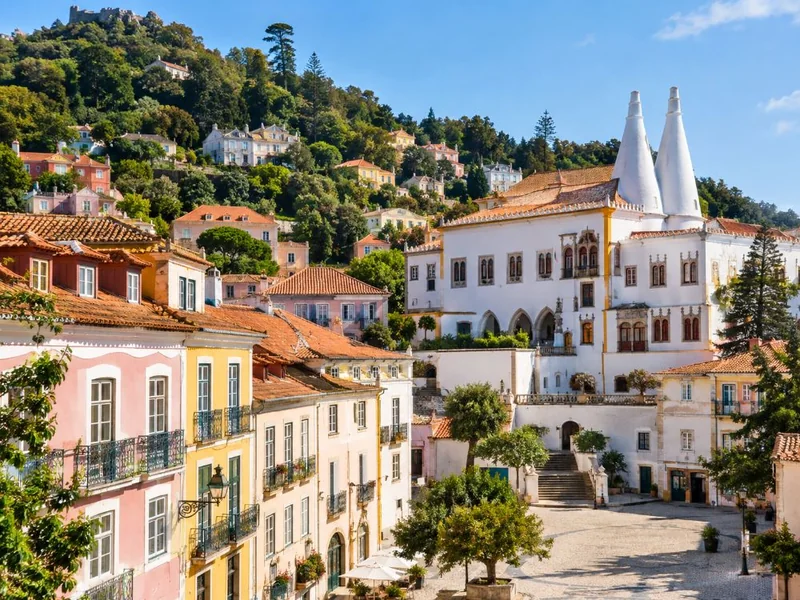
After the Christian conquest in 1147 the Moorish Castle lost its military role over time, and from the 14th century it slowly fell into ruin. The life of the town moved to the royal palace in the centre, which Parques de Sintra calls the only palace that spans the entire history of Portugal. Kings lived there more or less continuously from the early 15th century to the late 19th century, and it was there in 1415 that John I decided to conquer Ceuta.
The great change came in 1838, when Ferdinand II, the German-born king consort, bought the abandoned Pena monastery and the castle lands. The palace he built made Sintra the model of Romantic architecture. The State bought Pena in 1889, and Queen Amélia spent her last night there before the royal family went into exile in 1910.
What does the name Sintra mean?
The name comes from the medieval Suntria. Its origin is usually linked to the sun, though, like many old place names, its exact meaning is not certain.
The town's name has been written in several ways over the centuries, and English writers long called it Cintra. The medieval form Suntria is the one most sources point to. Beyond that, explanations vary, so take any confident translation with caution.
Whatever the name meant, the place was already notable in the Moorish period: a geographer of the time described it as permanently wrapped in fog, which is still the first thing many visitors notice.
Who built Pena Palace, and why does it look like a castle?
King consort Ferdinand II, with Baron von Eschwege directing the works from the 1840s. It was built as a romantic summer palace, designed to look like a medieval castle on a peak.
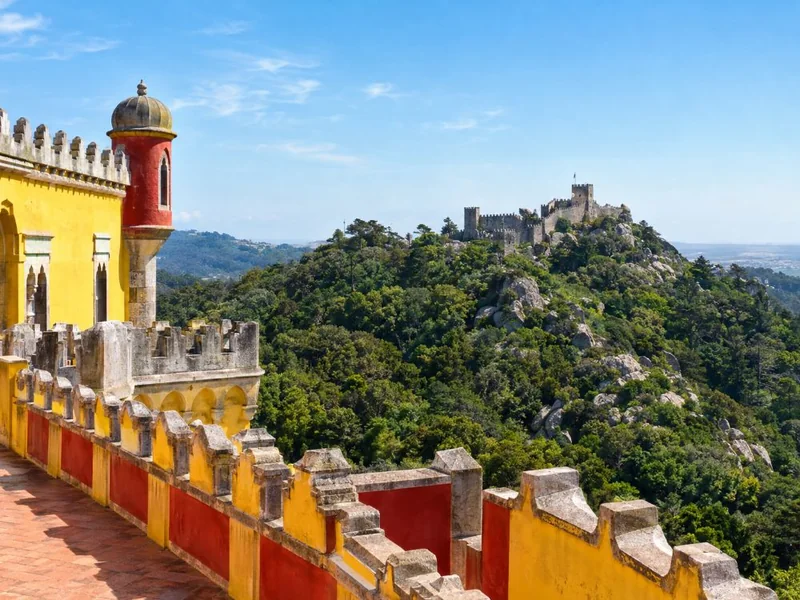
Ferdinand II bought the ruined monastery in 1838. The New Palace was begun around 1843, the main works ran from 1842 to 1854, and decoration continued into the mid-1860s. The old monastery became part of the new building, which is why the palace mixes a pink former convent with an ochre new wing. Those colours were restored in 1994.
Pena was never a fortress. It was a royal home dressed as one, set in a park of more than 200 ha with trees from around the world. Its terraces look straight across to the real castle on the next ridge, which Ferdinand also restored from 1840.
See Ferdinand II's palace and park with the official Pena ticket, timed palace entry and an audio guide app. Non-refundable.
Book thisWhy is Sintra considered mystical?
The fog, the dark forest and the symbol-filled garden of Quinta da Regaleira, plus centuries of local ghost stories. The atmosphere does a lot of the work.
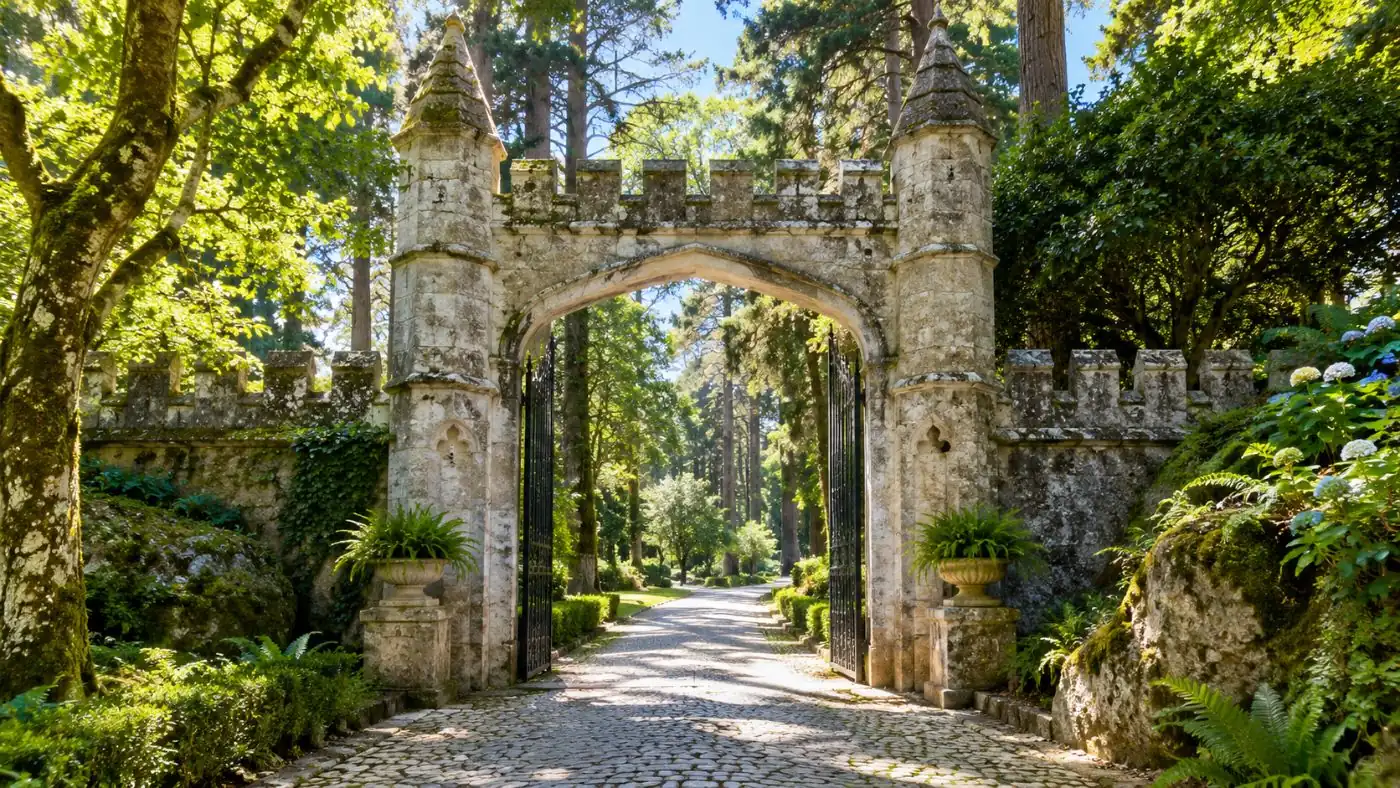
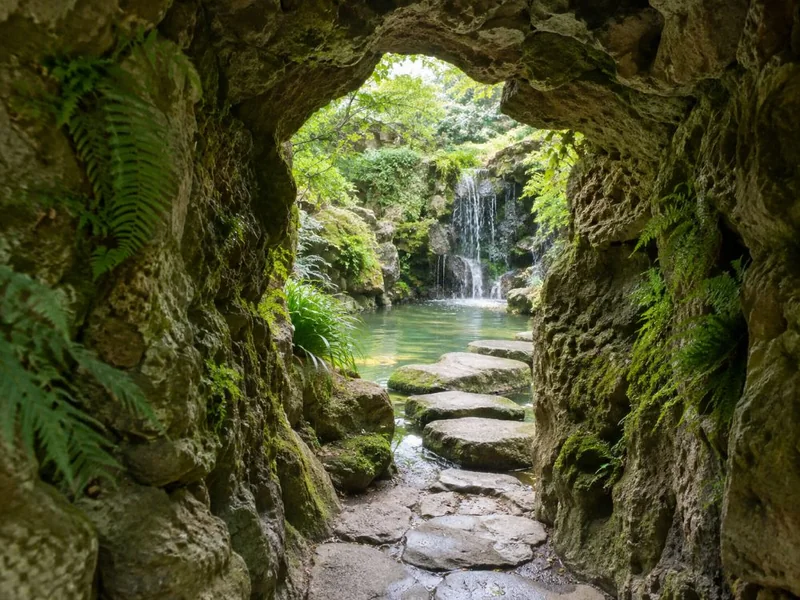
On many days the hills disappear into cloud while the coast below is clear, and the palaces come and go in the mist. Quinta da Regaleira adds a layer of deliberate mystery: its Initiation Well, tunnels and grottoes are full of symbols that people read as Templar, Masonic or inspired by Dante, though none of this is confirmed. Our Quinta da Regaleira guide separates the facts from the theories.
The town also has its legends. The evening ghost stories walk is a 2 h English-language walk in a group of up to 8, per the listing, with stops at the National Palace, St Martin's church and outside Quinta da Regaleira. It is not recommended for children under 12.
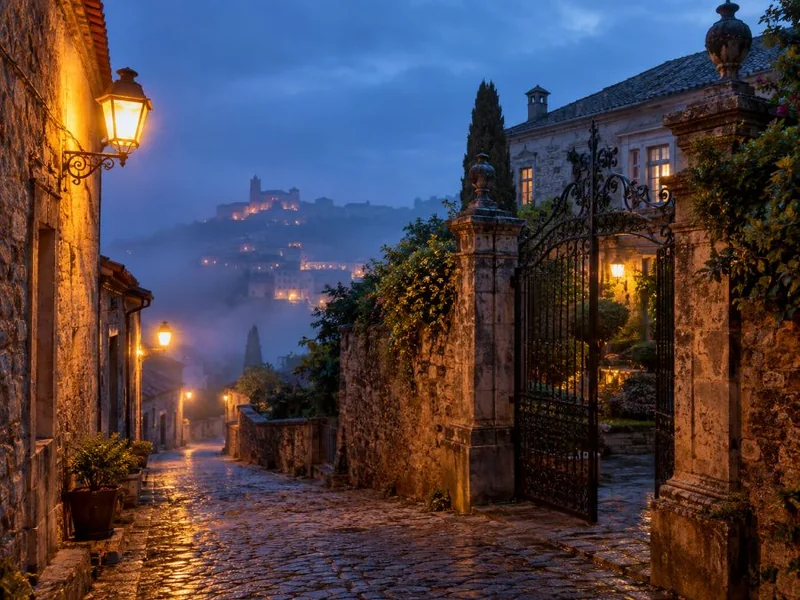
Sintra after dark: a 2 h ghost stories walk through the village in a small group, English only, per the listing.
Book thisWhat movie was filmed in Sintra?
The Ninth Gate (1999) used the Biester Palace in Sintra, and The Count of Monte Cristo (2002) was also filmed in Sintra.
The Biester Palace is a 19th-century residence in Sintra, and its ornate rooms suited the occult plot of The Ninth Gate. The 2002 version of The Count of Monte Cristo used Sintra for its period settings.
It is easy to see why film crews come. Within a small area you find medieval walls, royal rooms, a 19th-century fantasy palace and misty forest, all in the same light. You do not need a film tour to see the kind of scenery that drew them.
What food is Sintra famous for?
Travesseiros and queijadas. Piriquita, founded in 1862, created the travesseiro in the 1940s, and Sintra's small cheese tarts, the queijadas, were encouraged by King Carlos I.
The travesseiro (the name means pillow) is a rectangle of puff pastry filled with almond and egg cream, invented at Piriquita by Constância Luísa Cunha in the 1940s. The queijada is a small, sweet tart made with fresh cheese and baked in a crisp case. Piriquita, on Rua das Padarias in the centre, sells both.
A pastry stop fits naturally between the hill sights and the town sights. The half-day tour from Lisbon includes a travesseiro and queijada tasting during free time in the village, per the listing.

Why did Byron call Sintra a "glorious Eden"?
Because, to Romantic travellers, Sintra's mix of wild forest, ruined walls and sea views was the perfect landscape. Byron's phrase from Childe Harold's Pilgrimage stuck to the town.
Lord Byron wrote of "Cintra's glorious Eden" in Childe Harold's Pilgrimage, and the line helped put Sintra on the map for 19th-century travellers. It also fits the timing: Ferdinand II began restoring the Moorish Castle in 1840 and building Pena soon after, turning the poets' landscape into architecture.
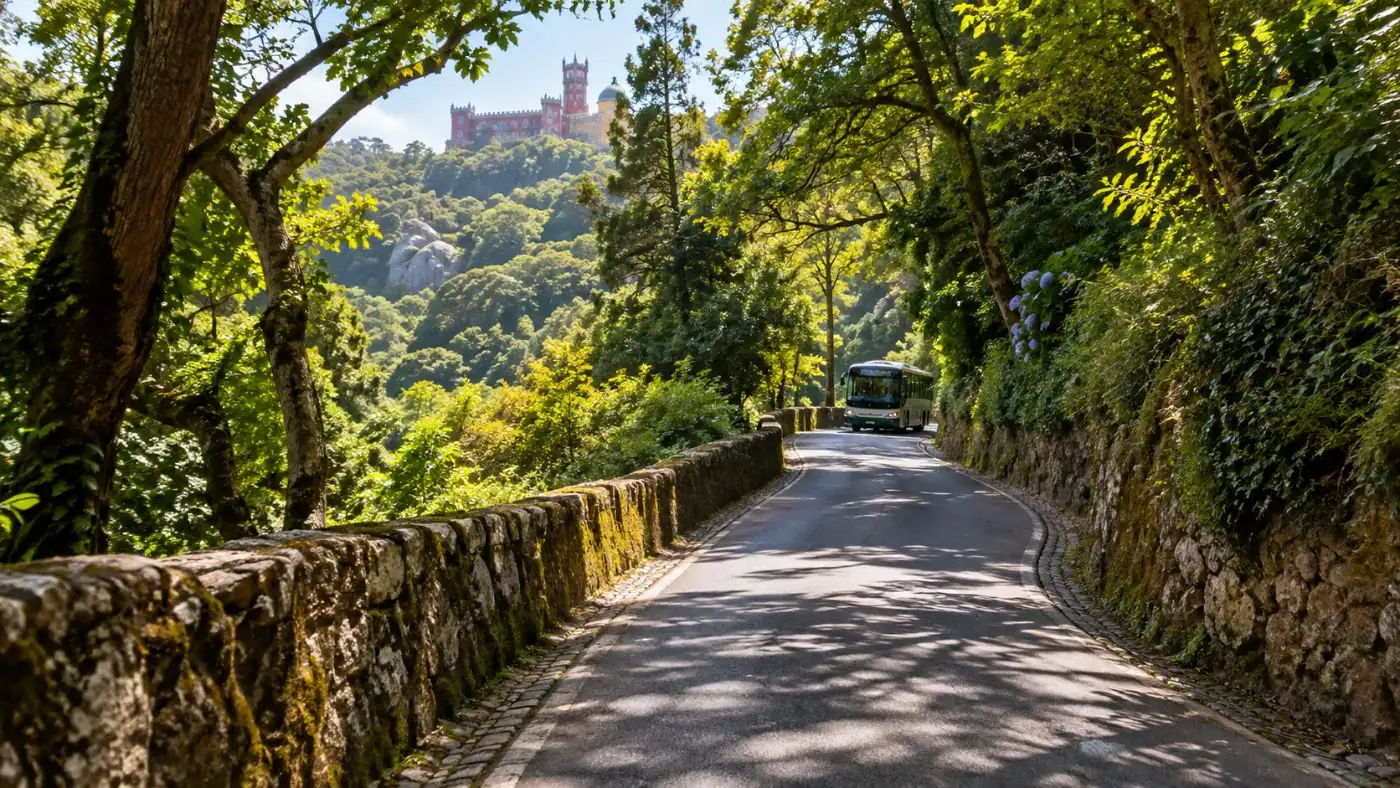
You can still stand where that view makes most sense: on the walls of the Moorish Castle, 412 m above sea level per the listing, looking across to Pena and out to the Atlantic. The official Moorish Castle ticket is valid for one day, is non-refundable and includes an audio guide app. Plan the rest of the day with our one-day Sintra itinerary.
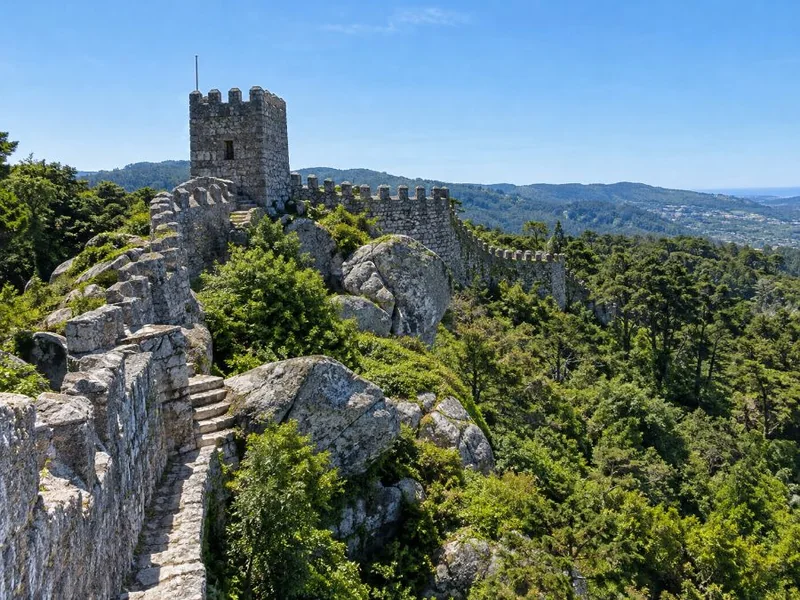
Walk the walls of Sintra's only real castle: the official Moorish Castle ticket with fast-track entry and audio guide app, per the listing.
Book thisFrequently asked questions
How many castles are there in Sintra?
Only one real castle, the Moorish Castle. Pena Palace, the National Palace, Monserrate and Quinta da Regaleira are palaces or estates, some built to look like castles.
How old is the Moorish Castle?
It was founded under Moorish rule; the official Parques de Sintra site dates it to the 10th century. It passed to Christian forces in 1147.
When was Pena Palace built?
King Ferdinand II bought the old monastery in 1838; the main works ran from 1842 to 1854, with decoration continuing into the mid-1860s.
Why is Sintra a UNESCO World Heritage Site?
UNESCO inscribed the Cultural Landscape of Sintra in 1995, recognising the combination of palaces, parks and forest across the hills.
Ready to book
Choose your ticket
Booked through GetYourGuide. Check the cancellation terms of each option before you choose a date.
Castle of the Moors Ticket
- Official fast-track ticket to the Moorish Castle
- Audio guide on the Zoomguide app in Portuguese, English, Spanish or French
- Bus 434 from Sintra station stops at the castle; transport is not included
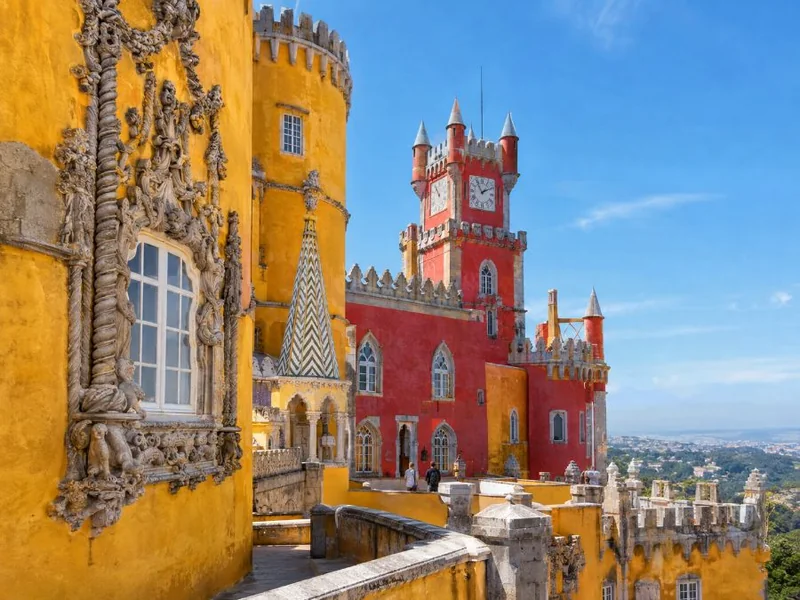
Pena Palace & Park Entrance Ticket
- Entrance to the Park of Pena and, depending on the option, the palace interior
- Entrance to the Chalet of the Countess of Edla
- Audio guide on the Zoomguide app in Portuguese, English, Spanish or French
Sintra Village Ghost Stories Walk
After the monuments close, a local guide walks a group of up to eight through the old village at night, past the National Palace and the gates of Regaleira, with the legends Sintra has collected over the centuries. Not for children under 12.